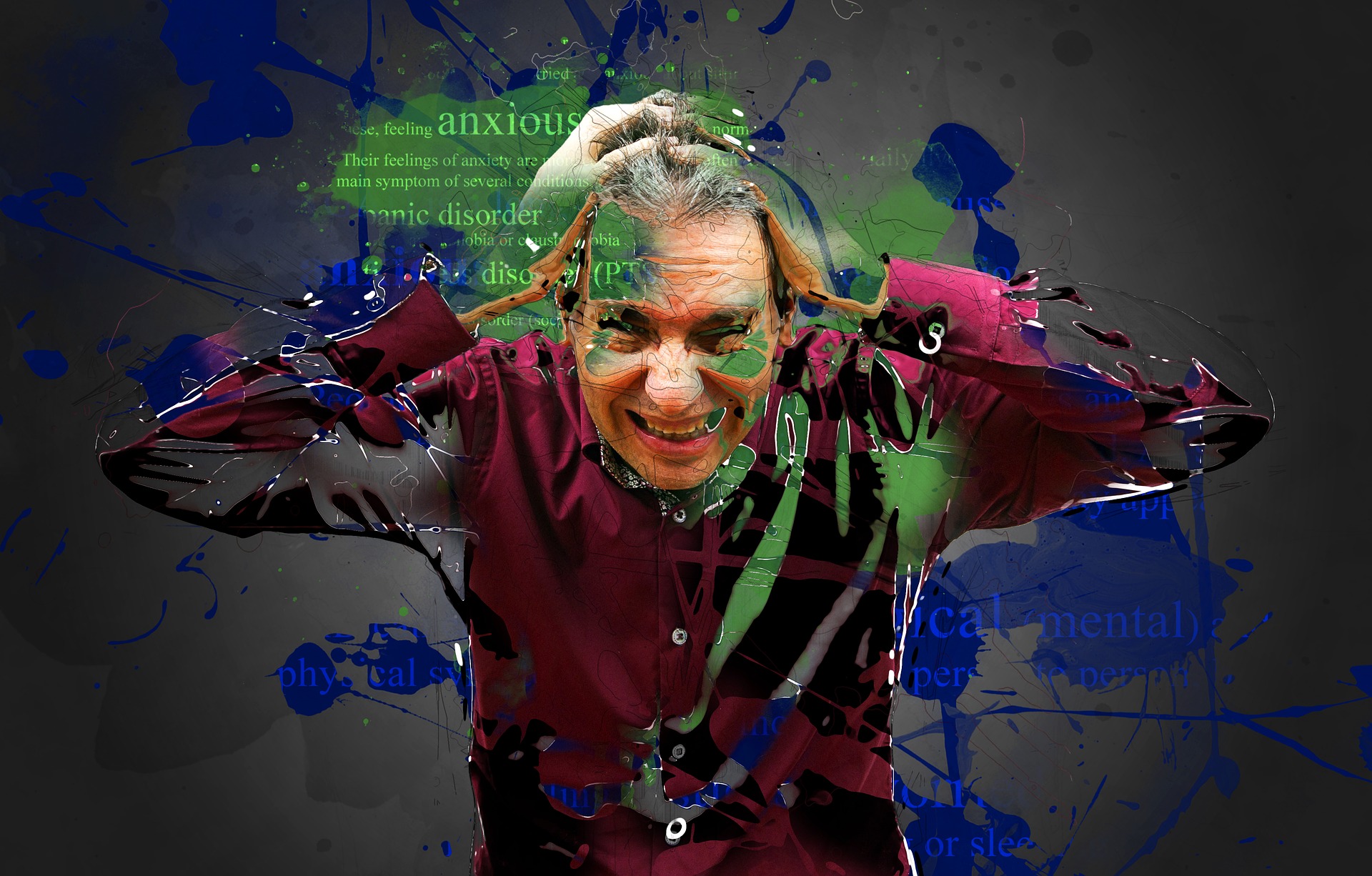
According to Anxiety.org, Tanja Jovanovic, Ph.D. states, “Anxiety is the mind and body’s reaction to stressful, dangerous, or unfamiliar situations. It’s the sense of uneasiness, distress, or dread you feel before a significant event.” This can allow you to be more reactive in a bad situation, however, sometimes anxiety pops up in situations that you wish it wouldn’t. Let’s take a look at the types of anxiety than many people encounter in life.
There are many subcategories of anxiety disorders, but they are usually categorized in six major categories.
- Generalized Anxiety Disorder (GAD)
- Panic Disorder
- Social Anxiety
- Post-traumatic Stress Disorder (PTSD)
- Obsessive Compulsive Disorder (OCD)
- Certain Specific Phobias
Anxiety can be something you have lived with since before you can remember, or something that came about over the course of your life from various situations. Some people have learned ways to cope with their own regularly occurring anxieties, whether with internal help or external help. Many people take medications to lessen the effects of anxiety, other people just deal with it the best they can, and yet other people can use skills they have adopted over time to minimize the impact that “anxiety flare-ups” can cause.
Generalized Anxiety Disorder (GAD)
Of the major categories of anxiety, generalized anxiety disorder (GAD), seems to be of the most common in adults. This type of anxiety encompasses every day worries about triggers such as finances and stressful situations, as well as worries about events or situations that have no known reasoning behind them. This types of anxiety can affect how you react to many regular, day-to-day situations.
Panic Disorder
Panic disorder, as the name suggests, is a type of anxiety disorder that can have accompanying “panic attacks”. Panic attacks can come unexpectedly and consist of physical reactions, like sweaty hands, hard time breathing, or even a feeling of something being very, very wrong. NIMH (National Institute of Mental Health) has a very informative brochure on panic attacks, as well as resources to understand and address it.
Social Anxiety
Social anxiety, also called social phobia, is basically a fear of social situations. With social anxiety, a person who has it tends to be fearful of what other people think of them, and of situations that can arise from such interactions. According to Thomas A. Richards, Ph.D., “Social Anxiety Disorder (social phobia) is the third largest mental health care problem in the world today.” Someone who has social anxiety may tend to not participate in many social events.
Post-Traumatic Stress Disorder (PTSD)
Post-traumatic stress disorder (PTSD) is a type of anxiety disorder that centers around a terrifying experience or some sort of highly negative impact on an individual, whether through injury or experience. Living through or watching a traumatic scene can cause post-traumatic stress disorder. Examples of things that can cause PTSD are,
- War
- Death
- Emergency situation
- Abuse
- Reoccurring fearful situation
- High levels of stress
Obsessive Compulsive Disorder (OCD)
Obsessive Compulsive Disorder (OCD), is characterized by an individual who has reoccurring and unwanted thoughts and behaviors that can be shown in regular activities. Very often, the person who suffers from OCD needs to carry out the actions of the compulsion to try to alleviate the obsession that they mentally feel towards said activity or behavior. Someone who has obsessive compulsive disorder tends to have anxiety due to the mental repetition.
Certain Specific Phobias
A specific phobia is one that causes anxiety due to a particular person, item, place, etc. This one “thing” causes undue stress on the affected person. This can be so intolerable that the person doesn’t want to mention it, see it, or have anything to do with it, and any instance of this happening can cause a heightened sense of fear and anxiety. Sometimes, the fear is unwarranted, since it can be towards something that would normally not cause harm or danger. Some specific phobias, however, can come from a situation of harm or something that has caused turmoil with the person in the past from some sort of experience with it.
Conclusion
Anxiety is a large part of mental health. It can cause physical, emotional, and mental symptoms, and a lot of people deal with anxiety related disorders on a regular basis. I, myself, suffer from social anxiety and severe anxiety, and I know that coping can be hard, some days more than others. I am including a series of references for anyone who needs assistance understanding these forms of anxiety, and many of the sites I am listing also include ideas for coping, or what to do if it seems overwhelming and you or someone you love needs help.
Resources:
- Social Anxiety Association = Social Anxiety
- American Psychiatric Association – PTSD/Post-traumatic stress disorder
- Anxiety and Depression Association of America – GAD/Generalized Anxiety Disorder
- NIMH – National Institute of Mental Health – Panic Disorder
- American Psychiatric Association – OCD/Obsessive Compulsive Disorder
- Beyond Blue – Specific Phobias
Many of the resources listed above dabble in multiple types of anxiety in regards to information and resources. I would suggest searching each site for even more information regarding each type.
What Content Would Help You, Dear Reader?
(polls)

 CLIMBE
Very informative. I think I have more than one type of anxiety. That makes me sound like I’m constantly anxious but learning to be in the present moment has been extremely helpful so I feel like I’m beginning to beat it at times. It still comes back almost daily, but I usually can get myself in the present moment. Sometimes I can’t and have a tough day, but it’s been helpful.
LikeLike
Thank-you! I definitely have more than one type as well. I, myself, feel like I am constantly anxious, especially lately. I did not realize years ago that I was having a panic attack at work until I called my doctor. I knew something was off, but I didn’t know what classified as a panic attack. I was diagnosed with social phobia a longggg time ago, and I have GAD for sure. I think a lot of people have anxiety, just in varying degrees, and some people are able to cope better than others.
Keeping yourself in the present is definitely helpful, although it can be tricky sometimes. This is where a lot of anxiety gets me, lately. I start worrying about the future, and then I start overthinking, right into a panic! I think it helps to remember that the future isn’t set in stone, and there is still time to fix any errors we may have seen coming. Even if we cannot avoid potential “catastrophe”, we need to have enough faith in ourselves that we are strong enough to come out on top, and that we have the ability to turn a negative into a positive. Reaction plays a large role, I feel. We cannot always control what comes at us, but we CAN control how we react to it.
Thank-you for your response!
LikeLiked by 1 person
Yes, it can be really tricky to keep yourself in the present moment. When I can do it, the anxiety will gradually go away temporarily. I do the same as you and worry about the future, then overthink, then panic. I can sometimes talk myself out of it by reminding myself that many of my past worries never happened and that all those worries were for nothing – then focus on the present moment. All I know is that I’m tired of living my life in worry-anxiety mode and I’ll keep working on ways to decrease it and hopefully cure it. I do think it has improved, but still definitely work to do on myself.
LikeLiked by 1 person
You got this! Acknowledging it and taking action are the biggest first 2 steps in my opinion, and you are doing both! You sound like you have a strong spirit, and I have faith you! Keep it up!
LikeLike